Puppy training costs anywhere from about $150 to several thousand dollars, and the format decides most of that. A six-week group puppy class at a big-box pet store is listed at $149. A private trainer who comes to your home usually means a few hundred dollars for a starter package. A board and train program, where the puppy lives with the trainer for weeks, is the most expensive by far. Here in Hampton Roads, a typical start with us is $550: a $150 introductory session plus a $400 four-session package, all in your home.
The cheapest option is not always the cheapest outcome, though. What a puppy needs between eight weeks and six months is different from what an adult dog needs, and some formats simply do not cover it. Here is what each one costs and what you actually get for the money.
Puppy Training Prices at a Glance
| Format | What you get | Typical price |
|---|---|---|
| Big-box group puppy class | Six weekly group classes for puppies 10 weeks to 5 months old, held in the store | $149 at PetSmart (published price) |
| Private in-home training | One-on-one sessions in your house, built around your puppy and your schedule | $550 to start with us ($150 intro + $400 for four sessions), then $110 per hour |
| Day training | A trainer reinforces skills at your home while you are at work | $75 per hour with us, for clients already in a program |
| Board and train | Your puppy lives with the trainer for a set period | Often thousands of dollars; one month-long program cited by Thumbtack was $3,000 |
PetSmart's prices come from its training page in November 2026 and may vary by store. For a national comparison, Thumbtack puts the average cost of hiring a private dog trainer at $285 to $950 and notes that puppy training tends to cost less than training an older dog. (Thumbtack)
What a Realistic Puppy Program Costs With Us
We publish our prices on our services and rates page, so here is the actual math for a new puppy in Virginia Beach, Norfolk or Chesapeake:
- Introductory session, $150. A 90-minute visit in your home with a behavior assessment, a customized training plan, a nutrition evaluation and homework.
- Four-session package, $400. Four one-hour sessions, which works out to $100 each, with email support between visits. It covers foundation cues, leash walking and house manners, and the package is good for six months from purchase.
- Extra sessions if you need them, $110 per hour. You can stop after the package, or add a few sessions later if your puppy hits adolescence and starts testing everything again.
That puts a typical start at $550 for five visits and about five and a half hours of one-on-one time, plus the homework you do between sessions. Travel fees may apply outside Virginia Beach. Our puppy training program covers potty training, crate training, leash walking, bite inhibition, socialization guidance, jumping and impulse control.
What Each Format Actually Covers
Group puppy classes
Group classes are the lowest price per hour, and a good one gives your puppy practice focusing around other dogs and people. The tradeoff is that the class happens in a store or a training room, not in your house. The problems that wear new puppy owners down, like accidents on the rug, crying in the crate at 2 a.m., biting hands and jumping on guests, happen at home, and a class has limited time to solve them one family at a time. Group classes also follow a fixed schedule. PetSmart's puppy class, for example, is for puppies 10 weeks to 5 months old.
Private in-home training
Private training costs more per hour because the whole hour is about your puppy. When the session is in your home, we work on the exact spots where things go wrong: the back door for potty trips, the crate in your bedroom, the kitchen where the counter surfing starts. Everyone in the household can be there, which matters because a puppy learns fastest when the whole family uses the same cues. This is the only way we train, and it is why we start with an in-home assessment instead of a class.
Day training
Puppies need short, frequent practice, and that is hard to fit into a workday. Our day training is for families already enrolled in a program: we come to your home while you are at work and reinforce what you are learning together, like potty training, leash walking and impulse control. It does not replace you being part of the training, but it keeps things consistent on busy weeks.
Board and train
Board and train costs the most, and for a young puppy it also means weeks away from home during the stretch when they are learning what their world is like. Your puppy may come back with good skills in someone else's house and still need help using them in yours. We explain the tradeoffs in detail in our board and train vs. in-home training guide.
Why Timing Matters More Than Price
The American Veterinary Society of Animal Behavior calls the first three months of life the most important time for puppy socialization, and it considers it the standard of care for puppies to start safe socialization before they are fully vaccinated. (AVSAB puppy socialization statement) Waiting a few months to save money can cost more later, because fear and reactivity are much harder and more expensive to work through in an adult dog than good experiences are to build in a puppy. Your veterinarian is the right person to tell you which places and dogs are safe for your puppy at each stage of the vaccine schedule.
In practice, that means starting soon after your puppy comes home. Potty and crate routines are easiest to set from the first week, and an in-home session lets us plan safe outings around your vet's advice instead of waiting for a class start date.
Costs That Are Easy to Forget
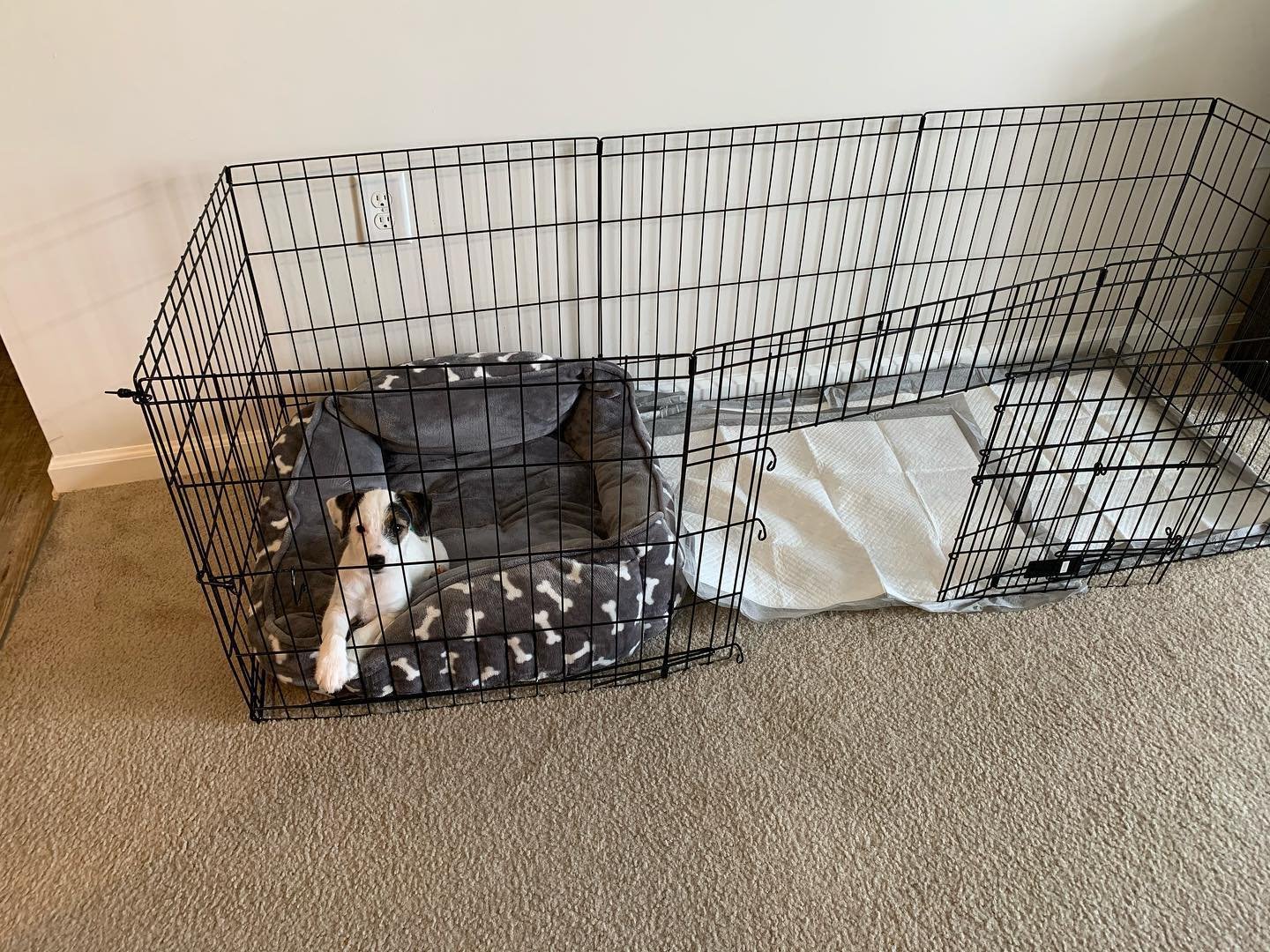
- Setup. A crate or exercise pen, a bed, potty pads if you use them, a flat collar or harness, a standard leash and a lot of small, soft treats.
- A city license. Virginia Beach requires a license for every dog over four months old: $10 a year for an unaltered pet or $7 for a spayed or neutered dog. (Virginia Beach City Treasurer)
- Tools you do not need. Prong collars, choke chains and shock collars are sometimes sold as training shortcuts. We do not use them, and AVSAB advises against aversive training tools because of their risks to a dog's welfare and behavior. (AVSAB humane training statement)
Questions to Ask Before You Pay Any Trainer
- What methods do you use? Look for reward-based, force-free training. If the answer includes corrections, prong collars or e-collars, keep looking.
- Where do sessions happen? A store, a facility or your home all suit different goals. Potty and crate problems are easiest to fix where they happen.
- What exactly is included? Session length, number of visits, support between sessions and how long a package stays valid.
- What will I be doing between sessions? Puppies learn from daily practice. A trainer who sends you homework is building your skills, not just your puppy's.
When It Is More Than Puppy Manners
Most puppy problems are normal puppy behavior that needs teaching. A few are worth a closer look early: a puppy who hides from visitors and will not come out, who growls when someone comes near the food bowl, or who panics when left alone for a few minutes. Those are the cases where our behavior support comes in, and if anything seems physical, like pain, a sudden change or accidents after your puppy was reliably house trained, start with your veterinarian. Once your puppy grows out of the puppy stage, our basic dog training picks up where puppy training leaves off.
If you have a new puppy in Virginia Beach, Norfolk, Chesapeake or nearby, the introductory session is the place to start. You can fill out our intake form or call (347) 645-1555.